
How to digitize handwritten recipes without changing them
5 min read
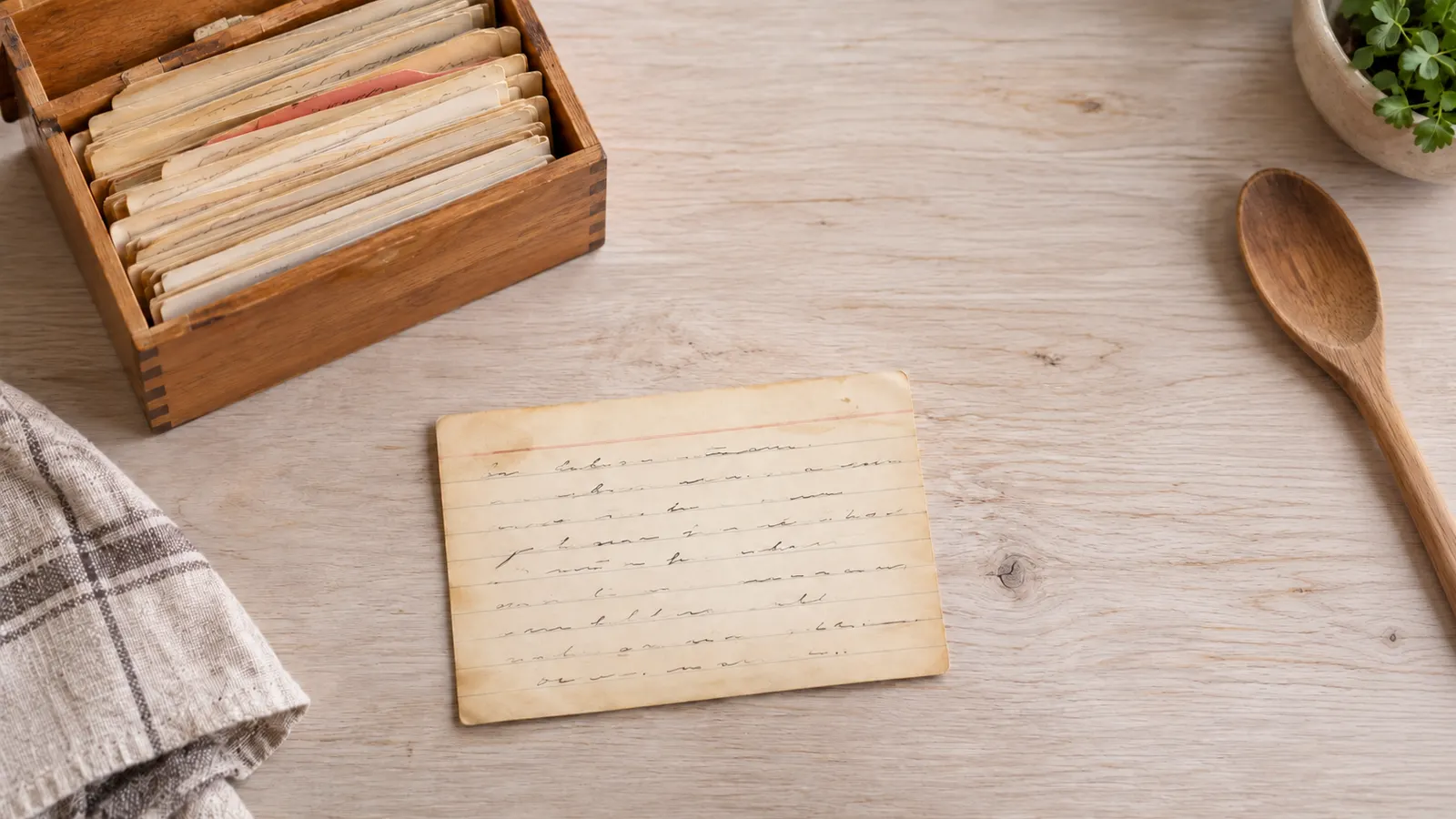
You open a family recipe box and find ingredients on the front of a card, instructions on the back, and a pencilled adjustment squeezed into the margin. A photo preserves those details. Editable text makes the recipe easier to read, search and print. Keep both, and check the numbers before treating the transcription as a cooking copy.
Start with one recipe you actually want to keep. You can type it yourself or use handwriting recognition, also called OCR, to get a first draft. The checking steps below work with either method.
Capture the whole recipe, including the reverse
Photograph each side in even light, with the camera facing the paper. Leave the edges visible so you can tell whether a line was cropped out. Zoom into the smallest fraction and the faintest pencil mark before putting the card away. If you cannot read them in the image, take another photograph. Do not force an old notebook flat to get a shot.
Keep the original image alongside the text. The US National Archives recommends scanning recipe collections for use and sharing while keeping the originals in safe storage in its guide to preserving family recipes. For everyday cooking, use a copy; its family-paper storage guidance also advises keeping originals away from food and water.
Copy what is written before making it easier to cook from
In the first transcription, retain quantities, abbreviations and the order of the instructions. Keep a crossed-out ingredient distinguishable from its replacement. Record an added note as an added note, rather than quietly incorporating it into the original list.
A card that says “bake until done” has no recorded cooking time. Leave that wording in the faithful copy. You can add a separate note after asking the person who makes it. A polished sentence from an OCR tool is not evidence that the missing instruction was on the card.
Our OCR proofreading checklist covers missing lines and unresolved words. For recipes, give the following details their own pass.
Check every quantity with its ingredient
Fractions, decimal points and units
Read each number against the image, then read its unit and ingredient on the same line. In a made-up example, “½ tsp salt” becoming “2 tbsp salt” changes both the amount and the unit. These examples illustrate what to check; they are not measured OCR error rates.
- Check fractions as a whole, including their slash or fraction bar.
- Keep a decimal point or comma visible in the transcription.
- Do not expand an unclear abbreviation by guessing what fits the dish.
- Check that a quantity belongs to the right ingredient, especially in columns.
- Keep a written temperature with its scale, if a scale is present.
What to do when a number stays unclear
Write “[quantity unclear]” rather than choosing the more plausible number. If a card says “180°” with no scale, copy it that way and note “[temperature scale not stated]”. Ask someone familiar with the recipe before using that detail. Do not turn an unresolved reading into a conversion or a new cooking instruction.
Keep clarification separate from the original
You do not need a special recipe app. A document with three labelled sections is enough: “Original transcription”, “Questions to resolve” and “Cooking notes”. Attach the card photographs or keep them in a folder with the same recipe name.
For example, put “one cup” in the original transcription if that is what the card says. Put “Which cup did the writer use?” in the questions. If a relative later confirms a particular measuring cup, record who clarified it and when in the cooking notes. Keep the original wording.
Give the file a useful name such as “Apple cake — recipe card 01”. Add the writer’s name only if you know it, and mark an uncertain date as uncertain. Before sharing, remove any unrelated addresses or personal details visible on the reverse. Keep a second copy somewhere you can still access if you lose the first device.
Try one card before digitizing the box
Pick a readable card, capture both sides, transcribe it and check every ingredient line. Give someone the photo and the checked text together so they can compare them. That first card will show you how much manual work your collection needs.
If you want help producing the first draft on iPhone or iPad, Encria transcribes handwriting and flags words the OCR was unsure of for review. A flag helps you decide where to look first; check the other quantities too. You can then copy the checked text into your own document. See how transcription works and read the privacy policy before sending a personal card for transcription.
Sources checked October 5, 2026. The National Archives article was published in fall 2016; its storage guidance was last reviewed September 18, 2025. The transcription workflow and examples above are editorial recommendations, not cooking instructions.